Estimate hard-to-measure water conditions from routine sensor data.
Combine continuous sensor readings, laboratory evidence and contextual data to estimate changing conditions, create virtual sensors and support timely operational or public information.
Connected monitoring and virtual sensing
Sensors provide a continuous picture of physical and chemical conditions. Laboratory samples provide reference evidence for targets that may be expensive, slow or impractical to measure continuously.
ANNA automatically trains and evaluates models using the relevant data and objectives to develop estimates, predictions or risk outputs. DAVE brings the evidence together and delivers results through dashboards, alerts and APIs, including to existing systems. The development framework is shared; models are trained for the application rather than taken from a catalogue.
What the approach can support
Hard-to-measure conditions
Use virtual sensors to infer parameters or risks that are not directly measured by the routine sensor network.
Earlier operational awareness
Follow changing conditions between laboratory samples and generate alerts when agreed thresholds or risk rules are met.
More dependable monitoring
Research how physical sensors and AI-derived estimates can be compared to identify drift, correction needs and maintenance priorities.
Current programmes
Yorkshire Water
A two-year programme across 20 sites developing bacterial-risk predictions and testing whether learning from one location can help at another.
Explore ↗BCP Sea Check
A public smartphone app bringing together live safety and water-quality information, including AI-powered alerts for harmful-bacteria risk.
Explore ↗Southern Water SCSN
AI compares physical sensor readings with virtual-sensor estimates to investigate drift, correction and maintenance needs.
Explore ↗Port of London Authority
Combining water-quality monitoring and laboratory sampling in DAVE while gathering training data for ANNA to develop harmful-bacteria predictions for the tidal Thames.
ExploreLive coastal information for beach users
BCP Sea Check brings together live safety and water-quality information in a public smartphone app, including an AI-powered alert for harmful-bacteria risk.
The project shows how monitoring, prediction and operational data can be translated into information people can use at the point of decision.
Explore the BCP project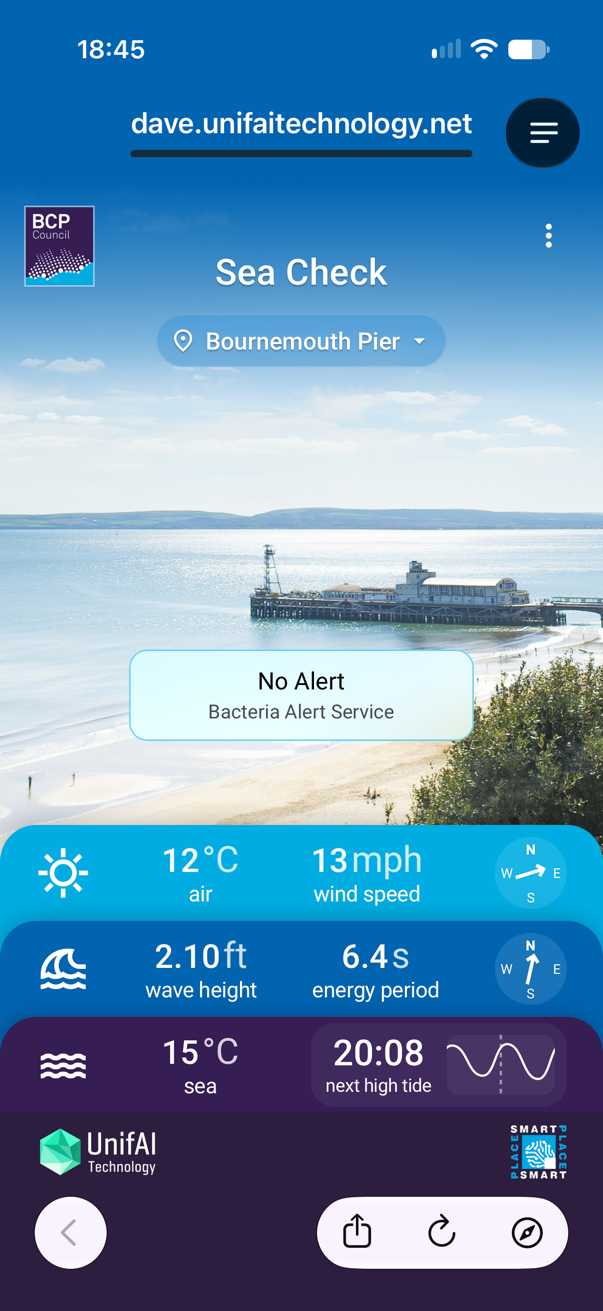
Earlier deployments and demonstrations
Warleigh Weir
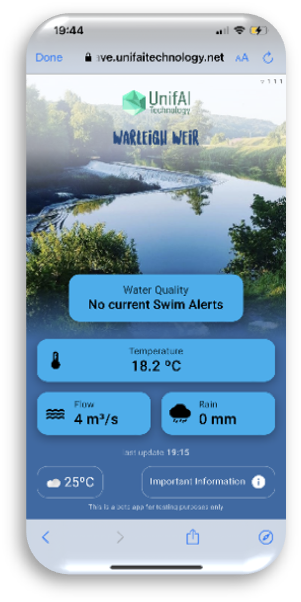
Continuous sensor data and laboratory evidence used to infer bacterial risk and provide real-time information to river users.
Explore ↗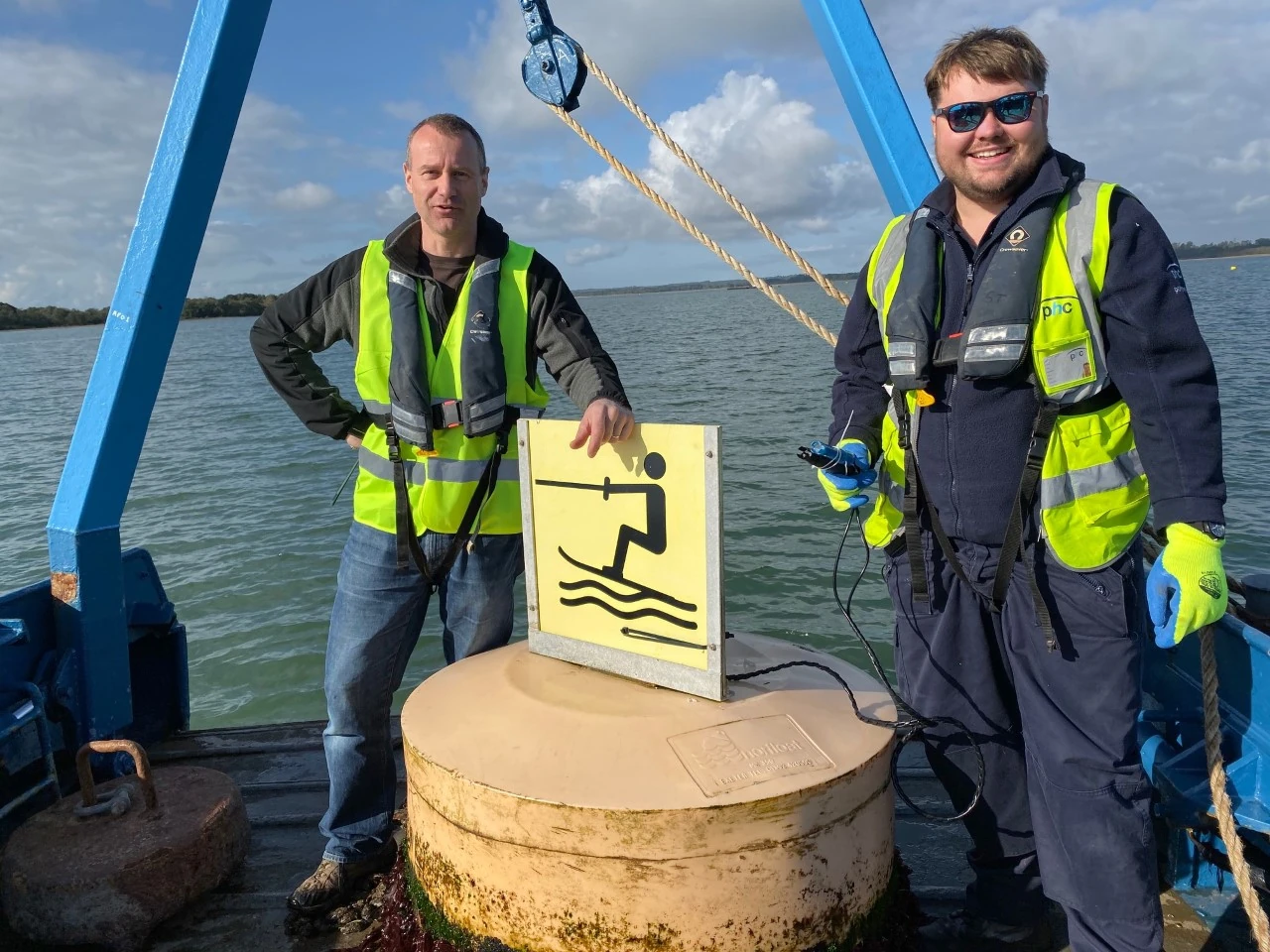
Poole Harbour
A two-year coastal pilot testing low-cost sensors, data integration and AI in a demanding harbour and lagoon environment.
Explore ↗Discuss a monitoring programme
Tell us what needs to be measured, the sites or assets involved, the available laboratory or reference evidence and the decision the output needs to support.
Talk about water monitoring